 WhatsApp Us

Silanes, SMP Polymers and Catalysts for Adhesive and Sealant Formulators
A modern moisture-cure sealant is not one chemistry. It is five — base polymer, adhesion promoter, crosslinker, end-capper, catalyst — and the day-to-day difference between a sealant that ships and one that gets returned is how well those five components were matched.
Manta makes base polymer and other items are supplied as complementary materials to support your full project needs.
Where formulations actually fail
Three problems show up again and again on production lines. Skin time drifts when humidity changes between morning and afternoon shifts, and a 15-minute target stretches to 45. Adhesion to anodized aluminum or polyolefin substrates passes the QC pull test and then fails in the field after 6 months of UV. And the RoHS, REACH SVHC and isocyanate-content boxes that buyers used to skim now have full audit trails behind them.
None of these are polymer problems on their own. They are interface problems. The base resin sets the modulus and elongation, but it is the silane chemistry around it that decides whether the sealant cures evenly, sticks for 20 years, and passes the MSDS check.
What Manta supplies
- SMP Polymers (silyl-terminated polyethers)— different grades from low-viscosity to structural
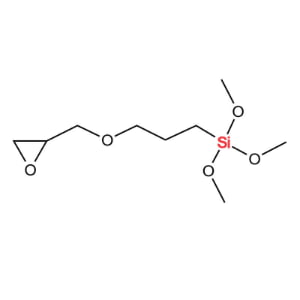
- Adhesion promoter silanes— amino, epoxy, vinyl, oligomeric
- End-capper silanes— isocyanate and isocyanurate functional, for STP-E synthesis
- α-silanes— for fast-cure, tin-free systems
- Organotin catalysts— including a chelated grade engineered for MS chemistry
This is the full kit for a one-component MS sealant. Most customers buy three to five products from the list and use them together.
Recommended Manta products
| Function | Grades | Notes |
| Standard SMP Polymer | MS27, MS305D, MS312, MS350 | General-purpose 1K sealant |
| Low-viscosity MS | MF3, MS2030T, MS2628 | High filler loading, easy gunning |
| High-strength MS | MS310A, MS3310, MS4000H, MS7500 | Structural and assembly |
| Specialty MS | MS3303H/I/M/T, MS330A/C | Hybrid and modified grades |
| Amino adhesion promoter | A110, A111, A146 | Universal substrate adhesion |
| Vinyl/methyl crosslinker | V31, 931 | Backbone moisture-cure |
| NCO end-capper | S121, S122, S310, S311, S320 | STP-E end-functionalization |
| α-silane (fast cure) | AM121, AM311 | Tin-free or low-tin systems |
| Tin catalyst | CAT-DBTDL, CAT-DBTA, CAT-DOTDL | Workhorse moisture-cure |
| Chelated tin (MS-grade) | CAT-CTHMTS | Drum-stable, low yellowing |
A note on α-silane vs γ-silane end-caps
Most SMP Polymer chemistry on the market still uses γ-aminopropyl end-caps and dibutyltin laurate catalysts. The cure mechanism works, but it is slow at 23 °C and 50% RH, and the tin loading needed to hit a 30-minute tack-free window pushes formulations close to EU reportable tin limits.
α-silanes (Manta AM121, AM311) put the alkoxy group on the carbon directly attached to silicon, not three carbons down. The hydrolysis rate climbs by roughly an order of magnitude. In practice, this means you can cut tin catalyst by half — or eliminate it — and still hit the tack-free target. For brands that want “tin-free” on the label, or that supply into EMICODE EC1+ and French A+ markets, this is the path most formulators take now.
When α-silane end-caps are paired with the higher-modulus Manta MS3310 or MS4000H, the resulting sealant runs above 3.0 MPa tensile while staying isocyanate-free. That combination — structural strength without isocyanate — is the brief on most architectural and bus assembly tenders we currently quote.
Cross-reference to industry standards
For benchmarking against widely-specified grades:
- Manta MS312A— comparable to Wacker GENIOSIL® STP-E35
- Manta AM121 — comparable to Wacker GENIOSIL® XL 10
- Manta A110 — comparable to Momentive Silquest® A-1100 and Evonik Dynasylan® AMEO
- Manta CAT-CTHMTS — comparable to TIB Kat® 318 and King Industries K-Kat® XK-651
All trademarks belong to their respective owners. Manta has no affiliation, sponsorship, or endorsement relationship with these companies. Cross-references are provided to help formulators identify products with comparable typical properties; lab-scale qualification is recommended before line trials.
FAQ
Can I drop a Manta SMP Polymer into an existing Kaneka-based formulation?
Most grades are designed to match on viscosity, end-group structure and modulus class. In our experience, viscosity is usually within ±10% and most customers re-balance plasticizer and filler by 1–2 phr to land back on the original profile. Run a 5 kg lab batch first — it almost always saves a line trial.
γ-silane end-cap or α-silane end-cap?
γ-silane is cheaper and proven, and most brands still ship it. α-silane costs more but cures 5–10× faster and lets you go tin-free. If you are bidding into EU low-emission certification or you want to drop tin loading, α-silane is the correct call.
Do you support new MS sealant development?
Yes. We provide starting-point formulations, 1 kg pilot samples, and troubleshooting on cure speed, adhesion and storage stability for qualified industrial customers.