 WhatsApp Us
Why silane coupling decides whether a silica tire compound works at all
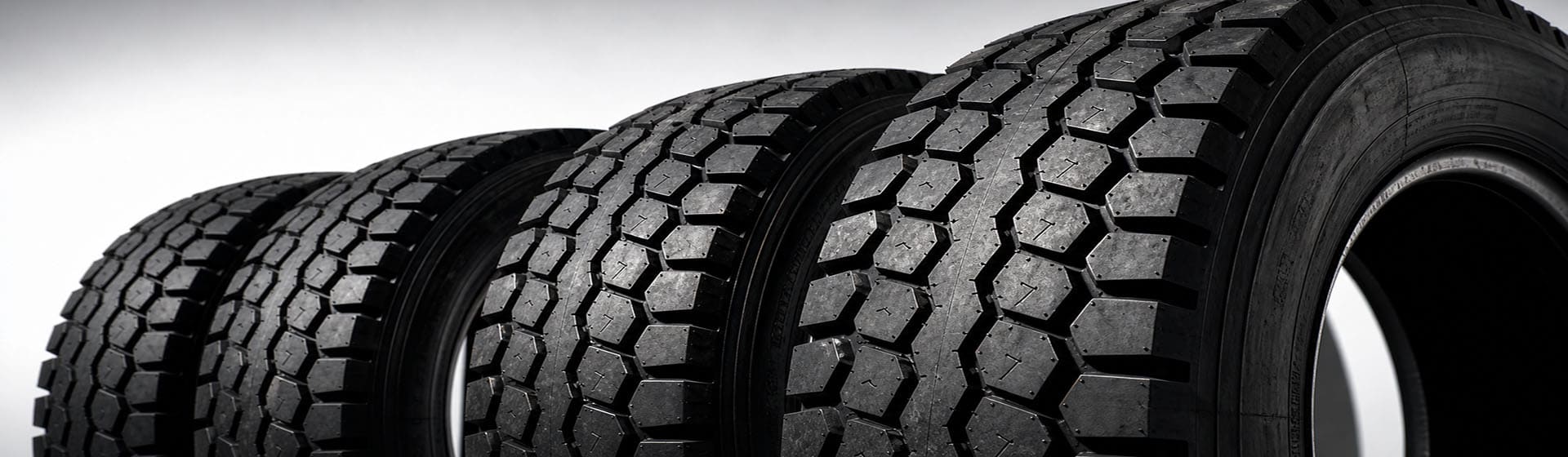
A modern passenger tire tread is no longer a carbon-black compound. The shift to silica/silane reinforcement — pioneered by Michelin in the 1990s and now standard across Europe and Japan — is the single biggest reason rolling resistance has fallen by roughly 25 percent over the last two decades. The silica gives the wet grip and the lower hysteresis. The silane is what makes the silica usable.
Untreated precipitated silica has a surface covered in silanol groups. In a non-polar rubber matrix it agglomerates, raises viscosity, and gives a compound that processes badly and tears at the surface. A bifunctional silane — ethoxy on one end, sulfur on the other — bridges silica to the polymer during mixing and curing. Without it, the silica might as well be sand.
Silane recommendations for rubber compounding
| Compound Type | Recommended Silane | Function |
| Passenger tire tread (silica) | Manta Si69 (TESPT) | Tetrasulfide coupling, in-situ cure activation |
| Truck/OTR tread | Manta Si75 (TESPD) | Disulfide, lower scorch risk at high mixing temps |
| EPDM weatherstrip, roofing | Manta V31 (vinyltrimethoxy) | Peroxide co-agent, improved heat aging |
| HNBR oil seal, fuel hose | Manta A171 / A172 | Vinylsilane crosslink boost, fuel resistance |
| Footwear, conveyor belt | Manta Si69 | General-purpose coupling, cost-balanced |
| Silicone-rubber blend | Manta 931 (MTMS) | Surface modification, silica dispersion |
TESPT versus TESPD — a working compounder choice
On paper, Si69 (bis-(triethoxysilylpropyl)tetrasulfide) gives the highest reinforcement because all four sulfur atoms can take part in the cure. In practice, that same reactivity is the problem. Above 150 °C in the internal mixer the tetrasulfide starts to release sulfur prematurely, and the compound scorches before it ever leaves the Banbury. For passenger tread compounds with a clean three-stage mix, this is manageable.
Si75 (the disulfide) trades one sulfur atom for a wider processing window. Truck and OTR compounders, who run hotter and longer mix cycles, almost always prefer it. The cured properties are about 5–8 percent below TESPT but the scorch margin is roughly 20 °C wider. It is the standard choice for any plant that has had a scorched batch dump in the last six months.
Manta produces both grades to the GMP-style purity profile that European tire customers expect — total chloride below 50 ppm, free TESPT/D above 95 percent, and consistent sulfur distribution batch to batch. Drum and 1000 kg IBC are stocked in Antwerp and Singapore for tire-plant pull supply.
Vinyl and amino silanes outside the tire tread
Not every rubber compound is silica-reinforced. EPDM roofing membrane and automotive weatherstrip use peroxide cure, where a vinylsilane like Manta V31 acts as a co-agent — it grafts to the polymer during cure and gives a tighter crosslink network with measurably better heat-aging at 125 °C. The dose is small, typically 0.5 to 1.5 phr, and the effect is largest in compounds with higher ENB content.
HNBR seals and fuel hose run hotter still. Here a combination of Manta V31 and a peroxide booster gives the matrix the resistance to ASTM Fuel C and IRM 903 oil that OEM specifications now require. We supply a number of seal makers in the German automotive supply chain on this exact recipe basis.
Cross-reference to industry standards
- Manta Si69 — equivalent to Evonik Si 69®, Momentive Silquest® A-1289, Shin-Etsu KBE-846
- Manta Si75 — equivalent to Evonik Si 75®, Momentive Silquest® A-1589
- Manta V31 — comparable to Momentive Silquest® A-171 and Shin-Etsu KBM-1003
- Manta 931 (MTMS) — comparable to Dow Z-6070 and Wacker M1-Trimethoxysilane
All trademarks belong to their respective owners. Cross-references are provided for technical comparison only; tire-plant qualification protocols apply.
FAQ
How much TESPT do I dose against silica loading?
The industry rule of thumb is 8 to 10 percent silane on the silica weight for a 80 phr silica passenger tread. For truck OTR running TESPD, raise it to 9 to 11 percent because the disulfide gives slightly less coupling per molecule.
Do I need a separate silanization step?
No. The point of TESPT and TESPD is in-situ silanization during the Banbury mix. A correctly designed three-stage mix at 145 to 155 °C drop temperature handles the silane reaction in the second pass. A separate silanization step is only used for very high silica loadings above 90 phr or for specialty compounds.
Is Manta Si69 supplied as liquid or on carrier?
Both. Liquid Si69 in 200 kg drum or 1000 kg IBC is the default for plants with metered dosing. The 50 percent on carbon-black variant (Manta Si69-X50) is supplied for older mixing rooms that need a non-dusting, free-flowing form.
Can I cross-check incoming Manta Si69 against my plant spec for Si 69®?
Yes. Each shipment carries a COA listing free TESPT, total chloride, sulfur distribution and color. The specifications are aligned to the published parameters used by the major European tire companies for sulfur-silane intake.