 WhatsApp Us
Why finishing chemistry sits with the silicone supplier
A softshell that beads water through 50 wash cycles, a leather upper that does not darken in the rain, a gypsum-board face paper that survives the wet end of the machine — all three depend on a thin layer of silicone or siliconate chemistry on the substrate. The active loading is small, typically 0.5 to 3 percent on the dry textile or 0.2 to 0.5 percent on dry pulp, but the consumer-perceived difference is large. Finishing is also where regulatory pressure has moved fastest. Anyone shipping textile, leather or food-contact paper into the EU after the upcoming PFHxA restriction has had to find a fluorine-free or low-fluorine path — and the practical fallback for water repellency is overwhelmingly silicone.
Manta Materials for textile, leather and paper finishing
| Substrate / Effect | Recommended Manta Code | Function |
| Textile DWR (cotton, polyester, blends) | Manta WS111 | Reactive siloxane emulsion, pad-dry-cure, durable to 20+ washes |
| Fluorine-free DWR (C0 transition) | Manta WS370 | PFAS-free water repellent emulsion, AATCC 22 spray 80–100 |
| Cationic exhaust softener / repellent | Manta WS400 | Cationic silane/siloxane emulsion, exhaust application |
| Methyl-hydrogen reactive emulsion | Manta EH101 / WS112 | PMHS emulsion for fabric, leather and paper hydrophobization |
| Hydroxy-functional PDMS emulsion | Manta EH102 | Hydroxy PDMS, leather softening and substrate finishing |
| Long-chain alkyl silane (C12 / C16 / C18) | Manta L1232 / L1631 / L1831 | Hydrophobization for nonwoven, leather, mineral paper |
| High-end fluoroalkyl AF / DWR | Manta F1731 / F1732 | Fluorosilane for premium oil + water repellency |
| C8 fluoroalkyl alternatives | Manta F1331 / F1332 | Methoxy / ethoxy fluoroalkyl silanes for specialty finishes |
| Paper & packaging hydrophobization | Manta WS111-P | Reactive siloxane emulsion specified for paper and packaging |
| Internal paper sizing / gypsum face paper | Manta MSEP / MSES | Potassium / sodium methyl siliconate, wet-end addition |
| Solid siliconate (transport, dry blend) | Manta WR-P01 / WR-P02 | Spray-dried siliconate powder, equivalent to Wacker BS 1001 |
Textile DWR — what really separates Manta WS111 from a generic emulsion
A finishing house running pad-dry-cure on cotton or PET cares about three numbers: spray rating after cure, spray rating after 10 to 20 home washes, and how the finish behaves on the stenter. Manta WS111 is a reactive siloxane emulsion designed for exactly this duty cycle. It crosslinks at 150 to 170 °C with a tin-free catalyst already built into the emulsion, and it carries through 20+ home wash cycles on polyester and 10 to 15 on cotton without the fluorine penalty.
For brands that have already committed to a C0 (fluorine-free) policy — most European outdoor and workwear customers since the 2023 PFAS restriction proposal was published — Manta WS370 is the direct path. It is purpose-built as a PFAS-free water-repellent emulsion. Spray rating on polyester is consistently in the 90–100 band on first cure; durable wash performance is in the 15–25 wash range depending on cure conditions. The honest position is that no C0 silicone matches a C6 fluorocarbon on oil repellency. For oil-and-water applications — restaurant uniforms, oil-rig coveralls, food packaging — the fluoroalkyl silanes Manta F1731 and F1732 remain the right tool.
Manta F1732 in particular is positioned against the same workhorses every formulator already knows. The product is described against industry standards as equivalent to Dow XIAMETER OFX-1107, Wacker SILRES BS 94, Wacker Crosslinker V 88 / L 31, Shin-Etsu KF-99 and Momentive TSF484. It is the SKU we expect tier-one outdoor and military fabric customers to specify when oil and water repellency are both required.
Cationic exhaust route — Manta WS400
Not every mill runs pad-dry-cure. Knit and circular jersey lines, especially in Turkey, Bangladesh and Vietnam, prefer exhaust application in the dyeing machine itself. Manta WS400 is a cationic silane/siloxane emulsion designed for that route. It exhausts onto negatively charged fiber surfaces at 40 to 50 °C, pH 4.5 to 5.5, and gives both a soft hand and a measurable water-repellent effect in a single bath. Manta describes WS400 against industry standards as equivalent to Wacker SILRES BS 45 — formulators can substitute on a pound-for-pound basis with the same dosing curve.
Leather and paper — quieter applications, same chemistry family
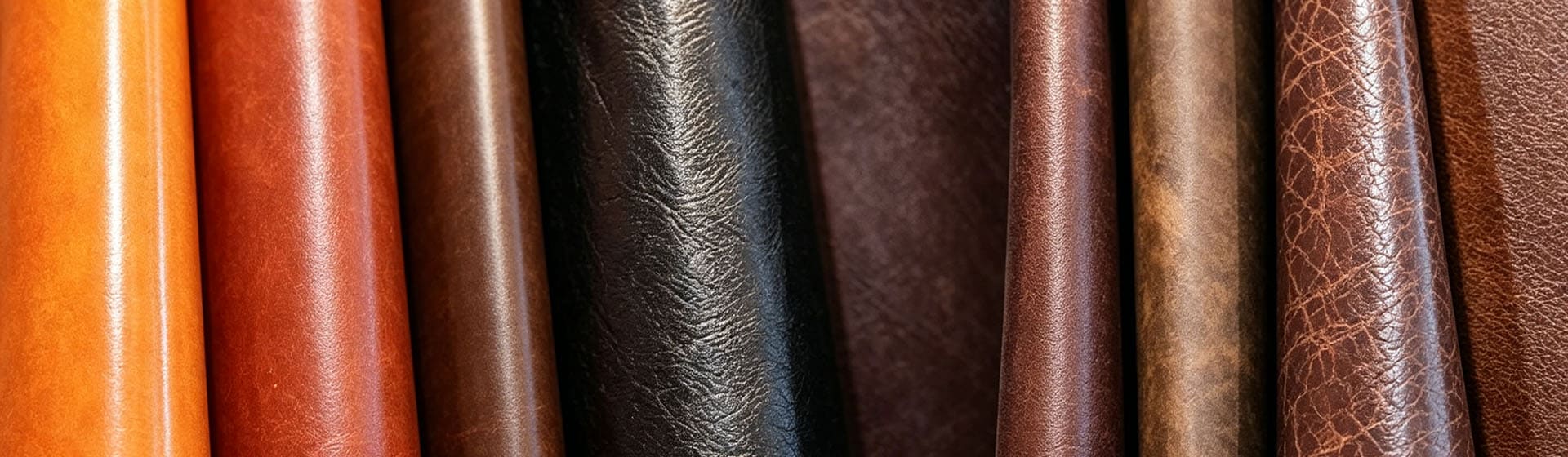
Leather finishing has used hydroxy-functional PDMS emulsions for soft-touch upholstery since the late 1990s. Manta EH102 is the hydroxy PDMS emulsion in this portfolio, used at 5 to 15 g/m² on the spray line. The result is a warm, slightly damped hand without the volatile organic load of older nitrocellulose lacquers. For leather hydrophobization, methyl-hydrogen emulsions Manta EH101 and Manta WS112 deposit an active Si-H film that crosslinks under mild heat and gives a durable water bead-up on full-grain and split leather alike.
Long-chain alkyl silanes are the second leather and nonwoven tool. Manta L1631 (C16) and L1831 (C18) are positioned as direct equivalents to Evonik Dynasylan 9116 and Wacker GENIOSIL HDTM-T — used as solvent-borne or emulsion-applied hydrophobic primers on leather, microfiber and mineral fiber paper. C12 grade Manta L1232 covers the lighter-substrate end of the same range.
Paper and pulp use a different family. Methyl siliconates — Manta MSEP (potassium) and MSES (sodium) — are added at the wet end of the paper machine for internal hydrophobization. The classic application is gypsum board face paper, where the paper has to resist water during board production but still bond to the gypsum core. Siliconate cures with atmospheric CO₂ over the first 24 hours after the paper machine. For dry-blend transport (long sea freight, hot-climate warehousing), Manta WR-P01 and WR-P02 supply the same chemistry as a free-flowing powder; WR-P02 is described as equivalent to Wacker SILRES BS 1001. Manta WS111-P is the dedicated paper and packaging variant of the WS111 reactive siloxane platform — used for greaseproof and water-resistant paper specifications where a non-fluorinated path is required.
Cross-reference to industry standards
- Manta WS400 — equivalent to Wacker SILRES® BS 45
- Manta EH101 — equivalent to DOWSIL™ 2-7887 Emulsion and emulsified forms of SILRES® BS 94 / TSF484
- Manta F1732 — equivalent to Dow XIAMETER™ OFX-1107, Wacker SILRES® BS 94, Wacker Crosslinker V 88 / L 31, Shin-Etsu KF-99, Momentive TSF484
- Manta L1631 / L1232 — equivalent to Evonik Dynasylan® 9116, Wacker GENIOSIL® HDTM-T (and a long-chain upgrade path from Shin-Etsu KBM-3103)
- Manta WR-P02 — equivalent to Wacker SILRES® BS 1001
All trademarks belong to their respective owners. Cross-references are provided for technical comparison only; finishing-line qualification trials are recommended before specification change.
FAQ
Will Manta WS370 give the same beading as a C6 fluorocarbon repellent?
On water, yes. AATCC 22 spray rating of 80 to 100 on polyester and cotton is consistently achieved after pad-dry-cure. On oil and alcohol, no. WS370 is silicone — it does not give oil repellency. If oil resistance is required, the answer is Manta F1732 or F1731 (fluoroalkyl silanes), not a fluorine-free emulsion.
Which Manta Products should I trial against my current Wacker BS 45 specification?
Manta WS400. It is described against industry standards as equivalent to Wacker SILRES® BS 45 — same cationic silane/siloxane chemistry, same exhaust application window, same dosing curve in the dyeing bath. Pull a 5 kg sample, run a side-by-side at the same on-weight-of-fabric loading, and compare AATCC 22 and hand evaluation.
Is Manta MSEP the right product for gypsum board face paper?
Yes. Potassium methyl siliconate at 0.2 to 0.5 percent on dry pulp is the industry-standard internal hydrophobization for gypsum board liner paper. Manta MSEP is supplied as an aqueous solution and dosed at the wet end before the headbox. For mills in hot or humid logistics chains where liquid stability is a concern, Manta WR-P01 (the spray-dried siliconate powder) gives the same chemistry without the freeze-thaw and shelf-life constraints of the liquid grade.
Can I blend long-chain alkyl silanes (L1631, L1831) into a textile DWR emulsion?
Not directly. The C16 and C18 alkyl silanes are designed for solvent-borne or pre-emulsified application — not as an in-bath additive to a finished aqueous DWR. For an alkyl-modified textile finish, the right route is a co-formulated emulsion based on WS111 with the alkyl silane built in at the manufacturing stage. Contact Manta technical for a custom-blend evaluation.
How does WS111-P differ from WS111?
Same reactive-siloxane platform, different surfactant package and emulsion stability profile. WS111 is optimized for textile pad-dry-cure with the surfactant chemistry stable to dye-bath residues. WS111-P is optimized for paper and packaging — the surfactant package is selected to be compatible with FDA and food-contact paper specifications. The two are not interchangeable on a process-line basis.