 WhatsApp Us
Silane Coupling Agents for Filled Plastics and Masterbatch Compounds
Filler loading is what decides whether a compound can be sold at a margin. ATH at 60% in cable jacket, CaCO₃ at 70% in masterbatch, glass fiber at 30% in PA66 — every percentage point of filler is cost saved on polymer. The catch is that without surface treatment, the same filler that saves money also wrecks the mechanicals.
A correctly chosen silane coupling agent solves three problems at once: tensile strength holds, elongation does not collapse, and melt viscosity stays processable. The wrong silane can ruin a compound — for example, an amino silane in a peroxide-cured polyethylene scavenges peroxide and kills the cure.
What separates a working compound from a failed one
Three things go wrong on most plant trials. Inconsistent silane purity batch-to-batch causes scorch in the mixer and yellow streaks in the strand. Wrong end-group chemistry — amino on a system that wanted vinyl — produces a compound that runs but has poor weathering. And residual moisture in the silane drum, often from poor packaging, hydrolyzes the alkoxy groups before they ever touch the filler.
These are not theoretical problems. They are the reasons compounders qualify silane suppliers far more rigorously than they qualify many other inputs.
What Manta supplies
- Amino silanes (mono-, di-, oligomeric)— universal coupling for ATH, MDH, glass fiber, talc
- Vinyl silanes— peroxide-grafted PE crosslinking, silane XLPE
- Epoxy silanes— engineering thermoplastics, glass-filled compounds
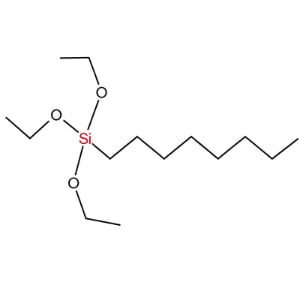
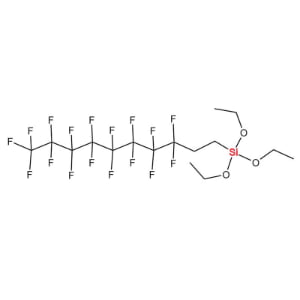
- Long-chain alkyl silanes— CaCO₃ surface modification, hydrophobization
- Alkoxy monomers (TEOS, TMOS, MTMS)— silica synthesis, sol-gel, aerogel hydrophobization
Recommended Manta products
| Filler / Application | Recommended Silane | Polymer System |
| ATH / MDH (flame retardant) | Manta A110, A111, A112 | EVA, LDPE, cable compound |
| Glass fiber sizing | Manta A110, A111, E560, E563 | PA, PBT, PP |
| CaCO₃ surface treatment | Manta L320, L1231, L1232 | PP, PE, masterbatch |
| Talc, mica, kaolin | Manta L320, A110 | PP, engineering plastic |
| Silica synthesis / sol-gel | Manta 931, TEOS, TMOS, PMTES | Specialty resin, optical |
| Wire & cable XLPE | Manta V31 | LDPE, MDPE crosslinking |
| Carbon black, pigment | Manta E560, OP200 | Color masterbatch |
| Aerogel hydrophobization | Manta 931 (MTMS), TMOS | Silica aerogel insulation |
Why ATH compound performance hinges on amino silane choice
Aluminum trihydrate is the dominant non-halogen flame retardant in cable and electronics. At 60% or higher loading it gives the right LOI and smoke density, but it also destroys the host polymer’s mechanicals unless the surface is coupled. The fix is amino silane treatment — and the choice between A110, A111 and A146 changes the outcome.
A110 (γ-aminopropyltriethoxysilane, equivalent to AMEO/A-1100) is the baseline workhorse. It gives strong reactive coupling but yellows at high cable processing temperatures, which matters on white and light-colored jackets.
A111 (di-amino, equivalent to DAMO/A-1120) doubles the reactive site density and is the standard pick for premium cable. It costs more than A110 but delivers higher tensile and lower water uptake.
A146 (oligomeric amino, equivalent to Dynasylan® 1146) emits the lowest VOC of the three and produces the lowest yellowing. It is the right call for white LSZH jacket and for FDA-grade compounds where odor matters. Manta produces all three to better than 98% GC purity, with batch-to-batch reproducibility documented on every COA.
Cross-reference to industry standards
- Manta A110 — comparable to Momentive Silquest® A-1100, Evonik Dynasylan® AMEO, Shin-Etsu KBE-903
- Manta A111 — comparable to Momentive Silquest® A-1120 and Evonik Dynasylan® DAMO
- Manta A146 — comparable to Momentive Silquest® A-Link 597 and Evonik Dynasylan® 1146
- Manta V31 — comparable to Momentive Silquest® A-171 and Shin-Etsu KBM-1003
- Manta E560 — comparable to Momentive Silquest® A-187 and Shin-Etsu KBM-403
- Manta 931 (MTMS) — comparable to Dow Z-6070 and Wacker M1-Trimethoxysilane
All trademarks belong to their respective owners. Cross-references are provided for technical comparison only.
FAQ
How much silane do I need for ATH treatment?
Typical loading is 1.0–2.0% of A110 or A111 by weight of filler, applied either as a pre-treatment on the filler or by integral blend during compounding. The integral route is cheaper but needs good dispersion in the mixer; pre-treatment costs more per kilo of compound but gives more reproducible mechanicals. We provide starting-point dosing and process recommendations on request.
Can I use one silane for both ATH and glass fiber in the same compound?
A111 is the most versatile single-silane choice when both are present. For premium engineering compounds, dual-silane systems — A111 paired with E560 — are common. The two silanes work on different filler chemistries without interfering with each other.
Is Manta 931 suitable for silica aerogel production?
Yes. Manta 931 (methyltrimethoxysilane) is a high-purity grade specified by silica aerogel producers for hydrophobization and surface modification. We supply this grade with documented water content below 200 ppm and GC purity above 99%.