Manta L1231 silane drum for stone conservation suppliers

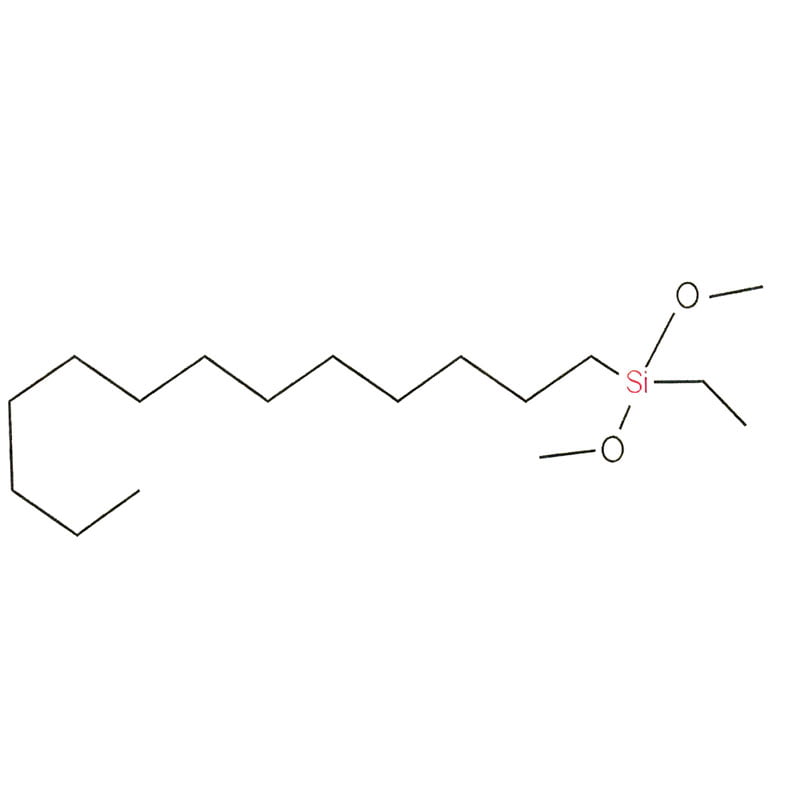
N-Dodecyltrimethoxysilane (C12) | Manta L1231

Product Code: Manta L1231

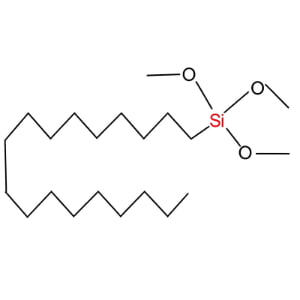
Chemical Name N-Dodecyltrimethoxysilane
CAS Number 3069-21-4
Product Form Liquid
Synonyms (Trimethoxysilyl)dodecane

Technical Specifications

PARAMETER VALUE / RANGE
Appearance: Colorless transparent liquid
Purity (by GC, %) 98.0 min
Specific Gravity (ρ20°C, g/cm3) 0.885~0.895
Refractive Index (nD 25°C): 1.4220~1.4320

Product Description

Manta L1231 is n-dodecyltrimethoxysilane (CAS 3069-21-4, ≥98.0% GC purity), a C12 alkyl silane used for water repellents on natural stone, concrete and sensitive masonry, including cultural heritage conservation, plus mineral filler modification and mold release. Comparable to Wacker GENIOSIL DD-Trimethoxy, its heavier C12 chain lowers volatility and gives a controlled penetration depth versus C8 silanes.

Manta L1231 is a monomeric long-chain alkyl functional silane, chemically identified as n-dodecyltrimethoxysilane. Featuring a 12-carbon (C12) linear alkyl chain, this product delivers exceptional hydrophobicity and outstanding weather resistance (UV stability).

Compared to shorter-chain silanes (e.g., C8 or C10), its heavier molecular structure significantly reduces volatility and provides a moderate, highly controlled penetration depth. This makes Manta L1231 exceptionally ideal for treating highly sensitive substrates and achieving premium, long-lasting surface modification without altering the natural breathability or aesthetics.

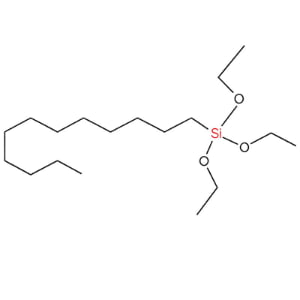
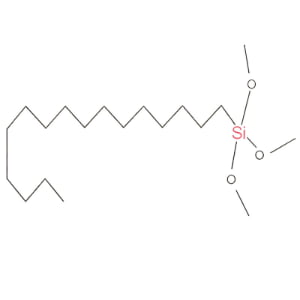
Chemically equivalent to Wacker GENIOSIL® DD-Trimethoxy, and serves as a long-chain functional upgrade to C10 silanes such as Shin-Etsu KBM-3103.
Applications

Manta L1231 is highly versatile and serves as a premium water repellent and interface modifier across a wide spectrum of industries:

  1. Cultural Heritage Conservation (Specialty Use): > Due to its extremely low volatility, controlled penetration, and durable hydrophobic network, it is highly recommended for the protection and restoration of historical monuments, artifacts, and highly sensitive porous masonry.
  2. Natural Stone & Concrete Protection: > Provides deep, long-lasting water repellency for premium natural stone, masonry, and concrete while retaining 100% water vapor permeability and the original appearance of the substrate.
  3. Surface Modification of Mineral Fillers: Significantly improves the dispersibility, compatibility, and hydrophobicity of inorganic fillers and pigments in non-polar plastics, rubbers, and resin matrices.
  4. Coatings, Adhesives & Sealants: Acts as a performance-enhancing additive to dramatically improve moisture resistance and interfacial adhesion.
  5. Mold Release Applications: Effectively functions as a semi-permanent release agent in various molding processes due to the strong non-polar nature and low surface energy of its long C12 alkyl chain.

Application Areas

Adhesives & Sealants Paints & Coatings Concrete, Masonry & Stone Protection Plastics & Masterbatches Composites & Fiberglass

Packaging & Handling

Packaging

In 20kg pail, 180kg drum and 900kg IBC


Safety and Storage

Highly Reactive & Methanol Release: Manta L1231 reacts with water and atmospheric moisture to form cross-linked polysiloxanes. CRITICAL WARNING: This hydrolysis reaction releases METHANOL as a toxic and highly flammable byproduct. Strictly ensure excellent local exhaust ventilation during formulation, application, and curing to prevent vapor accumulation.

Storage Conditions: Store in a cool, dry, and well-ventilated area strictly away from open flames and moisture. Keep containers hermetically sealed at all times to prevent premature moisture cross-linking.

Shelf life is 12 months. It is non-hazardous substance.

Support

Frequently Asked Questions

Why is Manta L1231 recommended for cultural heritage conservation?

Its extremely low volatility, controlled penetration and durable hydrophobic network make it suitable for protecting and restoring historical monuments, artifacts and highly sensitive porous masonry, while retaining full water vapor permeability and the original appearance.

How does the C12 chain of L1231 change penetration behavior compared with shorter-chain silanes?

Compared with C8 or C10 silanes, the heavier C12 molecular structure significantly reduces volatility and provides a moderate, highly controlled penetration depth—useful for sensitive substrates where aggressive penetration or evaporation loss is undesirable.

What safety measure is critical when applying L1231?

Its hydrolysis releases methanol, a toxic and highly flammable byproduct. Strictly ensure local exhaust ventilation during formulation, application and curing, and keep containers hermetically sealed away from moisture and open flames.

Can L1231 serve as a mold release agent?

Yes. The strong non-polar character and low surface energy of its long C12 alkyl chain let it function as a semi-permanent release agent in various molding processes.

Still have questions?
Our technical team is ready to help with formulation support.
Contact Us

Ready to work with N-Dodecyltrimethoxysilane (C12) | Manta L1231?

From 1-gram laboratory trials to 1,000+ kg production runs. Full CoA, SDS, REACH/TSCA documentation included. Laboratory samples available within days.

+86 189 6107 1292 inquiry@mantasil.com