 WhatsApp Us
What sizing chemistry actually controls in a composite
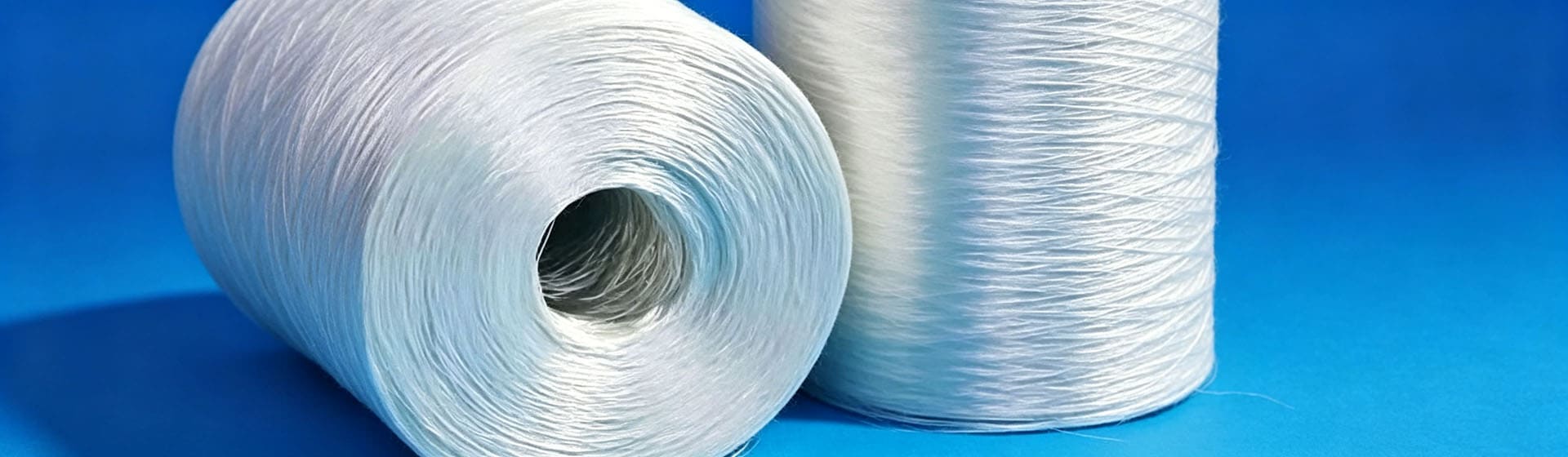
Glass fiber on its own is brittle, hydrophilic and a poor partner for any organic resin. The thin film applied at the bushing — the “sizing” — is what turns it into a usable reinforcement. A modern sizing is a mix of film former, lubricant, and silane coupling agent, with the silane making up perhaps 0.3 to 1 percent of the dry weight. That small fraction decides whether the composite delivers its catalogue strength after 1000 hours in 60 °C water.
The silane chooses which resin the fiber will work with. Aminosilanes go with epoxy and phenolic. Methacryloxy silanes go with unsaturated polyester and vinyl ester. Epoxy silanes are the all-rounder for thermoplastic composites. Pick the wrong one and the laminate looks fine — until it sees humidity, fuel, or fatigue.
Silane recommendations for sizing and direct addition
| Resin / Composite Type | Recommended Silane | Function |
| Epoxy laminate, prepreg | Manta A110, A187 (GLYMO) | Amino + epoxy coupling, wet-strength retention |
| Unsaturated polyester (UP) | Manta A174 (MEMO) | Methacrylate coupling, SMC/BMC, pultrusion |
| Vinyl ester, marine FRP | Manta A174 | Bisphenol-A vinyl ester, corrosion-grade FRP |
| Phenolic, friction | Manta A110, A1100 | Brake pad and clutch facing |
| Polyamide, polyester (TP) | Manta A187 (GLYMO) | Glass-reinforced thermoplastic compound |
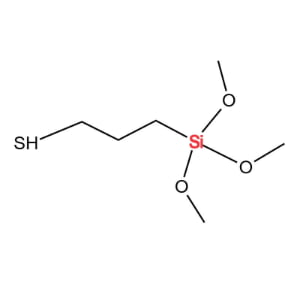
| Polyurethane (PU) | Manta A189 (mercapto) | PU pultrusion, hybrid composite |
The wet-strength test no one talks about until they fail it
A glass-reinforced epoxy laminate that comes out of the autoclave at 480 MPa flexural strength can drop to 300 MPa after 48 hours boil. The standard test (ASTM D2344 short-beam shear, boiled water exposure) is the one that exposes a bad sizing immediately. The aminosilane on the fiber is what holds the interfacial bond together when water tries to displace the resin from the glass surface.
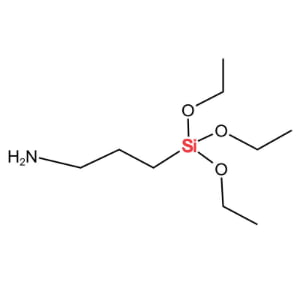
A110 (gamma-aminopropyl) is the classic and still the workhorse. A1100 oligomer gives slightly better wet-strength retention because the oligomeric form deposits a thicker, more uniform film. A187 (GLYMO, the gamma-glycidoxy version) is preferred when the matrix is epoxy and a longer pot life is needed at the sizing line.
For polyester and vinyl ester FRP — the bulk of marine, corrosion and pultruded structural — the choice is A174 (gamma-methacryloxypropyl trimethoxysilane). This silane co-cures with the styrene/methacrylate radical system and is the reason a properly sized pultruded rod can hold its modulus at 80 °C in 5 percent sulfuric acid for years.
Direct-addition silanes for compounders
Not every composite is built from sized roving. SMC and BMC plants that buy chopped strand are often sized for a generic resin and re-coupled at the compound stage with a direct-addition silane. The dose is small (0.2 to 0.5 percent on glass weight) but the effect on impact strength is large — typically a 30 to 50 percent uplift on Charpy notched.
Glass-reinforced thermoplastics — the 30 percent glass nylon 6 used in automotive intake manifolds, for example — rely on the same mechanism. Manta A187 dosed into the side-stuffer at the twin-screw is now the common practice across the European compounding base. We supply this grade in 200 kg drum and 1000 kg IBC under a typical contract length of one year.
Cross-reference to industry standards
- Manta A110 — equivalent to Momentive Silquest® A-1100, Evonik Dynasylan® AMEO, Shin-Etsu KBE-903
- Manta A1100 (oligomer) — comparable to Evonik Dynasylan® 1146
- Manta A174 (MEMO) — equivalent to Momentive Silquest® A-174, Evonik Dynasylan® MEMO, Shin-Etsu KBM-503
- Manta A187 (GLYMO) — equivalent to Momentive Silquest® A-187, Evonik Dynasylan® GLYMO, Shin-Etsu KBM-403
- Manta A189 (mercapto) — comparable to Momentive Silquest® A-189 and Shin-Etsu KBM-803
All trademarks belong to their respective owners. Cross-references are provided for technical comparison only.
FAQ
How do I screen a silane choice before a full sizing trial?
Pull a small batch of unsized roving, dip-coat with 1 percent silane in water/ethanol, dry, lay up in your resin and run an ASTM D2344 dry/wet pair. Two days of bench work that saves a wasted line trial.
Can A110 and A174 be blended?
Not normally. Aminosilanes catalyze the methacryloxy hydrolysis and the bath gels. If a hybrid sizing is needed, a blocked or oligomeric form is used, or the two are applied in sequence at the bushing.
Why is the wet-strength on my polyester FRP dropping after one year of marine service?
Most often the sizing is generic polyester sizing without a methacryloxy silane, or the silane was applied below 0.3 percent. Confirm the sizing certificate. If the sizing cannot be changed, a direct-addition of A174 to the resin at 0.3 to 0.5 percent on glass is a measurable improvement.
Do you supply a low-VOC version for indoor pultrusion lines?
Yes. Manta A1146 (oligomeric amino) and A187 oligomer have markedly lower VOC than the standard monomeric grades. Both are stocked for pultrusion and prepreg customers in Europe and North America.