 WhatsApp Us

Silane Adhesion Promoters and Silicone Resins for Coating Formulators
The paint formulator’s job has changed. Twenty years ago the question was which solvent to use. Today it is which silane, which fluoro chemistry, which silicone resin emulsion — and which of those still passes the buyer’s PFAS, VOC and microplastic screen.
Manta produces the four families that solve most of the day-to-day formulation work: silane adhesion promoters, silicone resin emulsions, fluoro-silane easy-clean additives, and coating-stable hydrophobic additives.
What buyers are actually asking for
Three demands keep showing up on tender documents. Water-based systems must adhere to substrates that water-based systems historically struggled with — galvanized steel, anodized aluminum, polypropylene. Architectural facade paints have to be hydrophobic to liquid water but breathable to vapor, or the wall blisters. And easy-clean and anti-graffiti finishes must deliver low surface energy without C8 fluoro chemistry, because that conversation is over in Europe and increasingly over in the US.
These are not new problems. They are problems that silane and silicone-resin chemistry was developed to solve, but only if the right grade is used and dosed correctly.
What Manta supplies
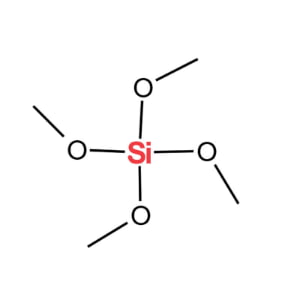
- Amino, epoxy, vinyl and mercapto silanesfor binder–substrate adhesion and pigment surface treatment
- Silicone resin emulsionsfor breathable mineral facade paint
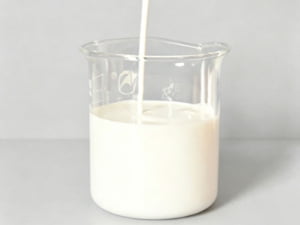
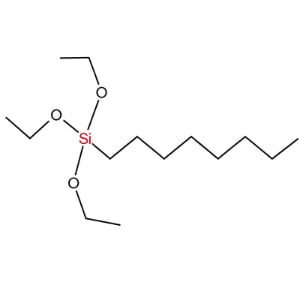
- Coating-stable silane-siloxane emulsionsas in-can hydrophobicity additives
- Short-chain (C6) fluoro-silanesfor PFOA-/PFOS-free easy-clean and DWR
- Silicone fluid emulsionsfor slip, sheen and hand modification
Recommended Manta products
| Function | Grades | Application |
| Amino adhesion promoter | A110, A111, A146 | Water-based, 2K epoxy, PU |
| Epoxy adhesion promoter | E560, E563 | Glass, metal, mineral pigment |
| Vinyl coupling agent | V31 | Peroxide-cure, UV systems |
| Mercapto adhesion promoter | S31 | Sulfur-cure, metal primer |
| Silicone resin emulsion | WS450, WS600 | Mineral facade, breathable masonry paint |
| In-can water repellent additive | WS136, WS168, WS170, WS513 | Architectural emulsion paint |
| Silicone fluid emulsion | AS101 | Slip, gloss control |
| Easy-clean fluoro silane (C8) | F1731, F1732 | Anti-graffiti, anti-fingerprint topcoat |
| Short-chain fluoro silane (C6) | F1331, F1332 | PFAS-restricted DWR and EC formulations |
Why silicone-resin emulsion still wins on mineral facades
Acrylic dispersions remain the cheapest binder for most architectural paint, and on plastic, wood and primed metal they are perfectly adequate. On lime render, cement render and natural stone they are not. Acrylic film is hydrophobic and vapor-tight. The wall behind it is not. Trapped vapor lifts the paint, salts crystallize at the interface, and within two or three years the facade is patchy.
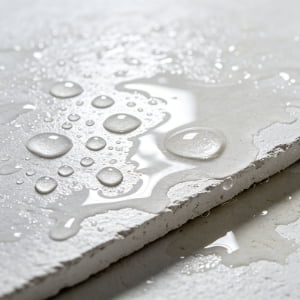
Silicone resin emulsions (Manta WS450, WS600) form a microporous siloxane network that rejects liquid water but lets vapor pass through. The numbers most spec writers want to see are EN 1062-3 water absorption (w-value below 0.1 kg/m²·h^0.5) and EN ISO 7783 vapor permeability (s_d below 0.14 m). Silicone-resin paint hits both at the same time. Acrylic does not.
In practice, formulators usually combine WS450 or WS600 with a small percentage (0.5–1.5%) of WS168 or WS513 in-can additive to deepen hydrophobicity, then let the paint dry on a chalky old test wall. If beading is uniform after one rain cycle, the formulation is on the right track.
Cross-reference to industry standards
- Manta WS450 — comparable to Wacker SILRES® BS 45
- Manta WS600 — comparable to Evonik Protectosil® and Wacker SILRES® BS series
- Manta A110 — comparable to Momentive Silquest® A-1100 and Evonik Dynasylan® AMEO
- Manta E560 — comparable to Momentive Silquest® A-187 and Shin-Etsu KBM-403
- Manta F1731 — comparable to Evonik Dynasylan® SIVO 214 and 3M™ Novec™ surfactants
All trademarks belong to their respective owners. Cross-references are provided for technical comparison only.
FAQ
Which silane works best in water-based 2K epoxy primer?
Manta A146, the oligomeric amino grade, gives the cleanest pot-life-vs-adhesion balance. A110 also works but tends to shorten pot life on hot days. For straight epoxy adhesion promotion in primer, E563 is the other common pick.
Are your fluoro-silanes PFAS-compliant for the EU market?
F1331 and F1332 are short-chain C6 grades, manufactured without PFOA or PFOS. The long-chain F1731 and F1732 are intended for industrial AF and anti-graffiti applications outside restricted-use categories. Always verify against your specific market regulation.