 WhatsApp Us
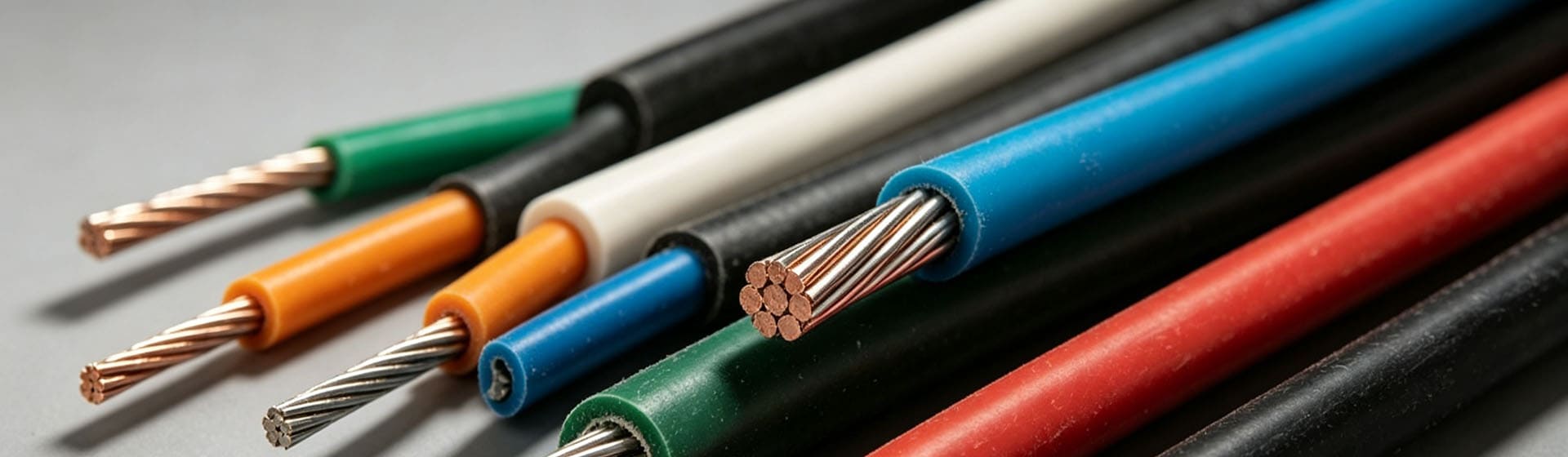
Silanes for XLPE Crosslinking and Flame-Retardant Cable Compounds
Power cable, communications cable and low-smoke halogen-free jacket compounds all rely on silane chemistry. The two technologies are different — one crosslinks the insulation, the other couples the filler — but both punish silane impurity in the same way. Trace water in the drum scorches the extruder. Low purity vinyl silane produces voids in HV insulation. A contaminated amino silane shows up as yellow streaks down a 50-meter run of white jacket.
This is why cable manufacturers qualify silane suppliers far more carefully than general compounders do. Manta produces cable-grade vinyl, amino, mercapto and epoxy silanes to specifications that match what major Sioplas and LSZH producers require.
Two silane technologies, two sets of constraints
Silane crosslinked polyethylene — Sioplas (two-step) and Monosil (one-step) — uses vinyltrimethoxysilane to graft and then moisture-cure LDPE or MDPE into a thermoset insulation. The performance depends on three numbers on the silane COA: water content below 100 ppm, total alcohol below 500 ppm, and acid value below 0.05 mg KOH/g. Miss any of those and the line will scorch or void within hours.
LSZH cable jackets are a different chemistry. ATH or MDH at 55–65% loading is coupled into EVA or polyolefin elastomer with amino silane. Here the constraint is yellowing — most LSZH cable is white or pale-colored, and even slight discoloration in the jacket is a quality reject.
What Manta supplies
- Vinyl silane (V31)— for Sioplas and Monosil XLPE
- Amino silanes (A110, A111, A146)— for ATH/MDH coupling in LSZH
- Mercapto silane (S31)— for sulfur-cure rubber cable
- Epoxy silane (E560)— for engineering jacket compounds and conductive carbon coupling
Recommended Manta products
| Cable Function | Recommended Grade | Notes |
| XLPE crosslinking (Sioplas) | Manta V31 | Vinyltrimethoxysilane, > 99% GC purity |
| XLPE crosslinking (Monosil) | Manta V31 | Same grade, qualified for one-step grafting |
| ATH-filled LSZH cable | Manta A110, A111 | Mono- and di-amino |
| MDH-filled high-temp cable | Manta A111, A146 | Di-amino, oligomeric low-VOC |
| White LSZH jacket | Manta A146 | Lowest yellowing, low-odor |
| Glass-reinforced jacket | Manta E560 + A111 | Dual-silane sizing |
| Sulfur-cure rubber cable | Manta S31 | Mercapto silane |
| Conductive carbon black coupling | Manta E560 | Carbon-polymer interface |
Sioplas vs Monosil — what specification matters
In the Sioplas process, vinyl silane is grafted onto LDPE in a separate compounding step before the cable extruder sees the material. Grafting happens in a controlled mixer with peroxide initiator, and the grafted compound is then pelletized, dried and shipped to the cable line. In Monosil, grafting and cable extrusion happen in a single pass through one extruder. Both processes demand the same silane purity.
The numbers that matter on the V31 COA are Karl Fischer water content (below 100 ppm), GC purity (above 99.0%), free methanol (below 500 ppm) and acid value (below 0.05 mg KOH/g). Manta V31 is produced and packaged to meet these specifications consistently. Drums are nitrogen-blanketed; lot-by-lot COA includes all four numbers. For Monosil producers running 24/7 lines, this consistency is what separates a smooth campaign from a scorch-induced shutdown.
On amino silane choice for white LSZH jacket, A146 is the right call almost every time. The oligomeric structure puts most of the silane mass into a higher-molecular-weight, lower-VOC, lower-odor product. Yellowing on extruded white jacket — the failure mode A110 and A111 sometimes produce — is essentially eliminated with A146.
Cross-reference to industry standards
- Manta V31 — comparable to Momentive Silquest® A-171, Evonik Dynasylan® VTMO, Shin-Etsu KBM-1003
- Manta A110 — comparable to Momentive Silquest® A-1100 and Evonik Dynasylan® AMEO
- Manta A111 — comparable to Momentive Silquest® A-1120 and Evonik Dynasylan® DAMO
- Manta A146 — comparable to Momentive Silquest® A-Link 597 and Evonik Dynasylan® 1146
- Manta E560 — comparable to Momentive Silquest® A-187 and Shin-Etsu KBM-403
All trademarks belong to their respective owners. Cross-references are provided for technical comparison only.
FAQ
What V31 specification should I require for Sioplas XLPE?
Minimum 99.0% GC purity, water below 100 ppm, free methanol below 500 ppm, acid value below 0.05 mg KOH/g. Manta V31 is produced and shipped to these specifications as standard, with each number on the lot COA.
Which amino silane is best for white LSZH jacket?
Manta A146. The oligomeric structure gives the lowest VOC and lowest yellowing of any amino silane on the market. A111 is the next best choice if A146 is not available, but expect slightly more color drift on long extruder runs.
Can I use the same vinyl silane for XLPE and EPDM rubber?
V31 is optimized for polyethylene grafting. For EPDM and rubber cable jackets, mercapto silane S31 or specialty sulfur-bearing grades are usually preferred — the chemistry of peroxide-cured EPDM differs enough from PE that the same vinyl silane is not optimal in both.