 WhatsApp Us
Liquid-Applied Waterproofing for Roof, Deck and Below-Grade Construction
Sheet membranes still ship in the millions of square meters every year, but on most modern jobs they are losing ground to liquid-applied systems. The reason is geometry. Today’s buildings have more parapets, more drains, more upstands and more odd-shaped penetrations than the buildings of twenty years ago, and every seam in a sheet membrane is a future failure point. A liquid system, applied correctly, has zero seams.
Manta produces five complete liquid waterproofing chemistries: cementitious, polymer-modified cementitious, silicone, MS polymer hybrid, and polyurethane. Each one earns its place on a different kind of project.
What goes wrong on real jobs
Three problems show up over and over on liquid waterproofing claims. Substrate moisture during application — the slab “looks dry” but vapor still drives off and blisters the coating within 48 hours. Cure-time mismatch — a single rain shower 6 hours after application washes off two days of work. And system incompatibility — the contractor uses a primer from one supplier under a topcoat from another, and the chemistry argues with itself for the next ten years.
A liquid waterproofing job is rarely a single product. It is a system: primer, base coat, reinforcement scrim where needed, top coat, and detailing compounds. The supplier who can deliver all five components, with documented compatibility, is the supplier who keeps the warranty intact.
What Manta supplies
- Cementitious 2K (JS-type)— wet rooms, basements, integral concrete
- Polymer-modified flexible cementitious— roofs and balconies with thermal cycling
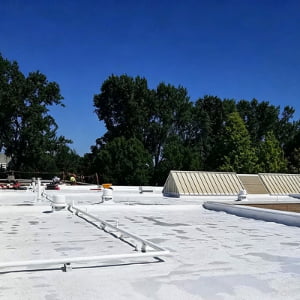
- Silicone roof coatings— UV-stable, ponding-water tolerant, white reflective
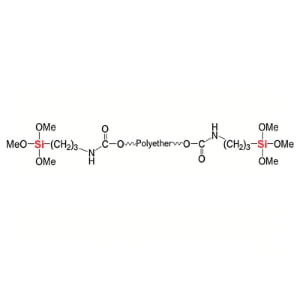
- MS polymer waterproofing— solvent-free, isocyanate-free elastic membrane
- Polyurethane liquid membranes— high-elongation, traffic-grade
- Crystalline waterproofing (CCCW)— permanent integral concrete protection
Recommended Manta products
| System | Grade | Best Use |
| Cementitious 2K (JS) | Manta CW-2K | General waterproofing, wet rooms, pool surrounds |
| Crystalline integral | Manta CCCW | Structural concrete, basement slab |
| Rapid-set cementitious | Manta CW-101 | Tile underlayment, shower tray |
| Plug repair mortar | Manta CW-Plug | Active leak stoppage, instant set |
| Polymer-modified flexible | Manta HP-2K | Roof, balcony, dynamic crack bridging |
| Silicone roof coating (1K) | Manta HS140 | Roof restoration, white reflective |
| Silicone topcoat (clear) | Manta SC-300 | Premium UV-stable elastic finish |
| MS polymer coating | Manta MS2024 | Solvent-free elastic membrane, isocyanate-free |
| Polyurethane membrane (1K) | Manta PU-1K | Deck, parking, high-traffic horizontal |
Why silicone roof coatings outlast acrylics by three times
Acrylic elastomeric roof coatings are economical and widely specified, but they have two known field weaknesses. Under prolonged ponding water, the acrylic film softens and rewets — installers know this as “swelling and slumping” on flat roofs with poor drainage. Under continuous UV at parapet edges and high-elevation roofs, the same film chalks visibly within five to seven years.
Silicone roof coatings (Manta HS140, SC-300) cure into a fully crosslinked siloxane network. The Si–O backbone is intrinsically UV-stable and the cured film is hydrophobic and unaffected by ponded water. Field data from the US silicone roof coating market — published by independent roofing consultants — shows 18 to 25 years of continuous service with minor recoat at year 12 or 15. On lifecycle cost, silicone is the only liquid system that competes with single-ply membranes.
For new construction with thermal-cycling stress and adhesion to mixed substrates, Manta MS2024 is a different path: solvent-free, isocyanate-free, elastomeric properties between PU and silicone, and adhesion to most substrates without primer. It is the system most often quoted into Middle East and Southeast Asia residential roof tenders that demand “no-isocyanate” labeling.
Cross-reference to industry standards
- Manta HS140 — comparable to GE/Momentive Enduris® and Dow Silicone Roof Coatings
- Manta MS2024 — comparable to Sika MS waterproofing grades
- Manta PU-1K — comparable to BASF MasterSeal® Traffic-grade PU
- Manta CW-2K — meets China JC/T 2090 and EN 14891 CMOIIB performance specifications
- Manta CCCW — performs to standards comparable to Xypex® and Penetron® crystalline systems
All trademarks belong to their respective owners. Cross-references are provided for technical comparison only; site-specific qualification and warranty requirements should be confirmed with the original manufacturer where required.
FAQ
Which system should I specify for an exposed flat roof?
On new construction, Manta HS140 silicone delivers the longest service life with the lowest maintenance burden. On roof restoration over an existing aged membrane, MS2024 or PU-1K usually win on adhesion to legacy substrates and contractor-friendly application. The decision often comes down to climate — silicone for hot and high-UV regions, PU for temperate and high-traffic.
Can MS2024 be applied to a damp substrate?
MS polymer chemistry tolerates slight surface dampness better than PU systems but should not be applied to actively wet surfaces. If the slab is still drying, Manta CW-2K cementitious is the only safe option — it will cure on a damp substrate and provide a base for a later topcoat.
Are Manta waterproofing products certified for potable water contact?
CCCW and CW-101 grades are formulated to meet typical drinking-water-contact specifications. Project-specific certification (NSF 61, KTW, AS/NZS 4020) is available on request and is normally turned around in 4 to 6 weeks for a documented project.