 WhatsApp Us
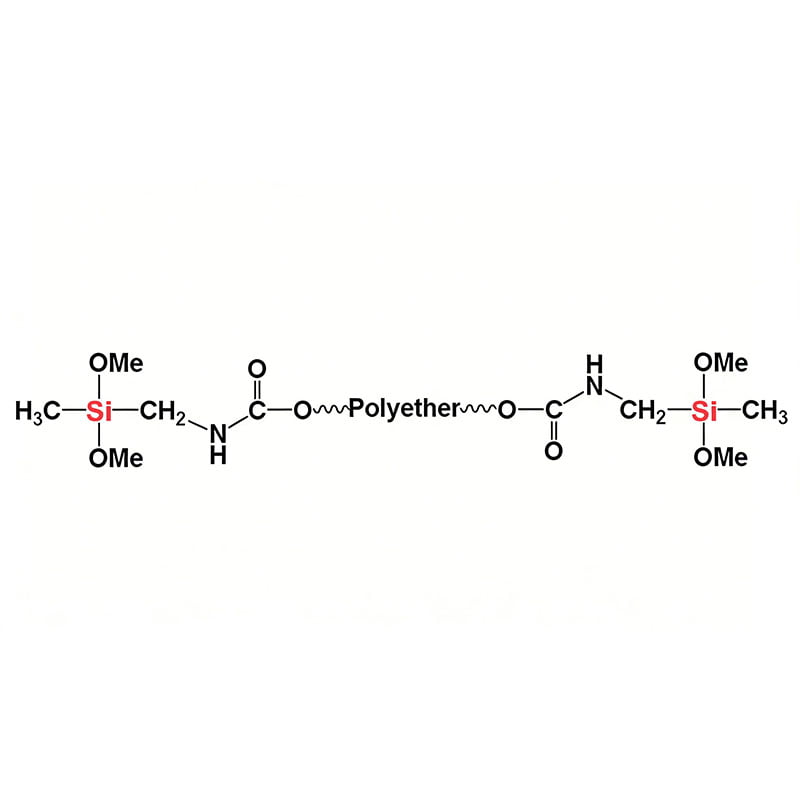
Manta MS313 is an alpha-silane terminated polyether (dimethoxy(methyl)silylmethylcarbamate end groups, viscosity 30000-42000 mPa·s at 25°C) used as a binder for moisture-curing industrial adhesives, construction sealants and electronic potting compounds. The alpha-effect of its terminal groups gives fast tack-free times and allows tin-free, plasticizer-free formulations without organotin catalysts.
Manta MS313 is a silane-terminated polyether (STPE) polymer designed for the formulation of high-performance moisture-curing adhesives and sealants. Unlike conventional silylated polymers, Manta MS313 features a unique alpha-silane structure (dimethoxy(methyl)silylmethylcarbamate group). This specific molecular architecture places the electron-donating nitrogen atom in close proximity to the silicon atom, significantly accelerating hydrolysis (known as the alpha-effect).
This intrinsic high reactivity allows for rapid curing profiles without the need for toxic organotin catalysts, offering a safer and more environmentally friendly alternative to traditional polyurethane or silicone systems. It cures upon exposure to ambient moisture to form a tough, elastic, and durable siloxane network.
Properties
- Novel Alpha-Silane Technology:Exhibits extremely fast curing speeds and rapid tack-free times due to the alpha-effect.
- Eco-friendly & Tin-Free:Enables the formulation of tin-free and plasticizer-free adhesives, meeting stringent regulatory standards.
- Superior Processability: Low viscosity allows for easy compounding with high filler loadings without compromising flow properties.
- Balanced Mechanics:Delivers exceptional tensile strength and high elasticity, adjustable to a wide range of modulus requirements.
- Excellent Stability: Provides long shelf-life stability in properly sealed formulations.
- Broad Adhesion:Bonds well to a variety of substrates without primers.
Unlike conventional silylated polymers, Manta MS313 features a unique silane structure. This specific molecular architecture places the electron-donating nitrogen atom in close proximity to the silicon atom, significantly accelerating hydrolysis.
This intrinsic high reactivity allows for rapid curing profiles without the need for toxic organotin catalysts, offering a safer and more environmentally friendly alternative to traditional polyurethane or silicone systems. It cures upon exposure to ambient moisture to form a tough, elastic, and durable siloxane network.