Manta L1831 silane drum for superhydrophobic coating makers

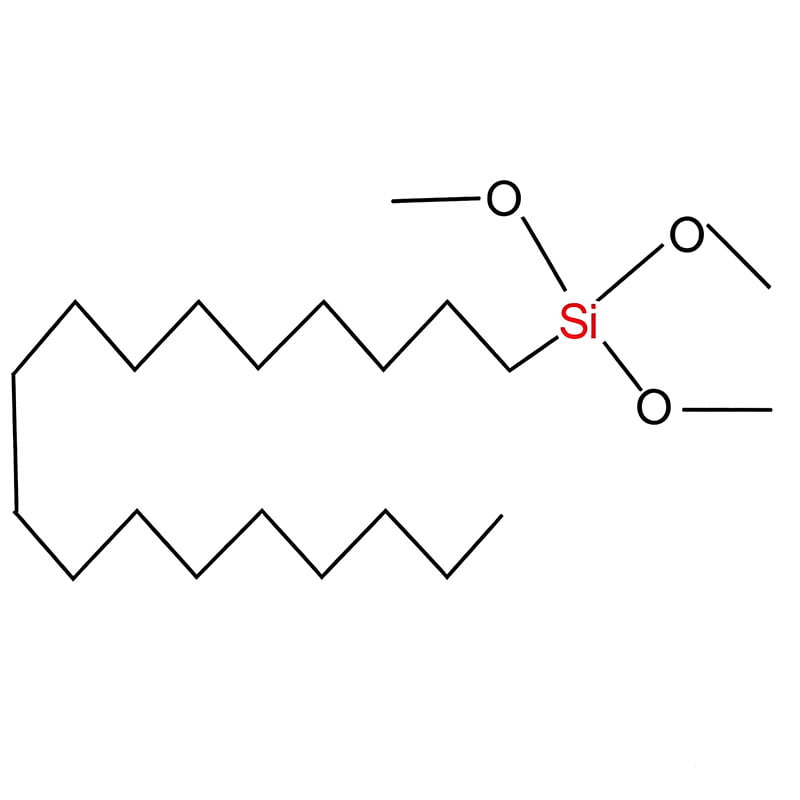
Octadecyltrimethoxysilane (C18) | Manta L1831

Product Code: Manta L1831

Chemical Name Octadecyltrimethoxysilane
CAS Number 3069-42-9
Product Form Liquid
Synonyms Trimethoxyoctadecylsilane; Long-Chain Alkyl Functional Silane (C18)

Technical Specifications

PARAMETER VALUE / RANGE
Appearance: Colorless clear liquid (May appear as a white waxy solid at temperatures below 17°C)
Purity (by GC, %) 95.0 min
Specific Gravity (ρ20°C, g/cm3) Approx.0.883
Refractive Index (nD 25°C): Approx.1.438-1.440

Product Description

Manta L1831 is n-octadecyltrimethoxysilane (CAS 3069-42-9, ≥95.0% GC purity), a C18 alkyl silane used for superhydrophobic and self-cleaning coatings, mineral filler treatment in polyolefins, pigment dispersion and semi-permanent mold release. Its 18-carbon chain gives very low surface energy with virtually no volatility, and the liquid solidifies to a waxy solid below about 17°C.

Manta L1831 is a monomeric long-chain alkylfunctional silane, chemically identified as n-octadecyltrimethoxysilane. Featuring an exceptionally long 18-carbon (C18) linear aliphatic chain, this product delivers unparalleled hydrophobicity and extreme lipophilicity (affinity for non-polar environments).

The highly non-polar nature of its massive octadecyl group drastically minimizes surface energy, making Manta L1831 an elite surface modifier for inorganic substrates, minerals, and pigments. Upon exposure to moisture, its reactive methoxy groups undergo rapid hydrolysis to form durable, covalent siloxane bonds with the substrate. Concurrently, the long C18 chain extends outward to create a dense, highly water-repellent protective layer.

Due to its high molecular weight, Manta L1831 exhibits virtually no volatility and outstanding thermal stability. It is particularly highly regarded in applications demanding superhydrophobic surfaces, heavy-duty mineral filler treatments for polyolefins, and the highly specialized surface modification of submicron or nano-particles.
Applications

  1. Mineral Filler Treatment (Plastics & Rubber):  A highly effective surface modifier for inorganic fillers (like ATH, MDH, and silica) in polyolefins. It drastically reduces melt viscosity, significantly improves processability, and maintains mechanical strength for highly loaded polymer compounds.
  2. Superhydrophobic Coatings:  Ideal for formulating premium superhydrophobic (lotus effect) and self-cleaning coatings. It provides extreme, long-lasting water repellency for concrete, glass, and ceramics by drastically lowering the substrate’s surface energy.
  3. Pigment Dispersion:  Prevents the agglomeration of ultrafine pigments (e.g., TiO2) and nanoparticles, ensuring rapid wetting, excellent dispersion, and higher color strength in masterbatches and industrial coatings.
  4. Mold Release:  Acts as a highly thermally stable, semi-permanent release agent in rigorous plastic and rubber molding processes, owing to its exceptional non-polar properties and high thermal resistance.

Application Areas

Paints & Coatings Plastics & Masterbatches Rubber & Tires

Packaging & Handling

Packaging

In 20kg pail, 180kg drum and 900kg IBC


Safety and Storage

Phase Change (Melting/Freezing): Manta L1831 has a melting point of approximately 16–17°C. If solidified during winter transport or storage, gently warm the container in a warm water bath or temperature-controlled room until fully liquefied. Do not use an open flame.

Hydrolysis Reaction & Methanol Release: Manta L1831 reacts with moisture to form cross-linked polysiloxanes. CRITICAL WARNING: This hydrolysis reaction releases METHANOL as a toxic and highly flammable byproduct. Ensure excellent local exhaust ventilation during formulation and application to prevent vapor accumulation.

Storage Conditions: Store in a cool, dry, and well-ventilated area away from direct sunlight and moisture. Keep containers hermetically sealed.

Transport: 12 months shelf life. Classified as a non-hazardous substance for transport.

Support

Frequently Asked Questions

What should I do if Manta L1831 arrives solidified in cold weather?

L1831 has a melting point of approximately 16–17°C and may appear as a white waxy solid below 17°C. Gently warm the container in a warm water bath or a temperature-controlled room until fully liquefied—never use an open flame.

How does L1831 enable superhydrophobic 'lotus effect' coatings?

Its massive octadecyl group drastically lowers the substrate's surface energy while the methoxy groups form covalent siloxane bonds, creating a dense water-repellent layer. This delivers long-lasting superhydrophobic, self-cleaning performance on concrete, glass and ceramics.

What ventilation is required when formulating with L1831?

Its hydrolysis releases methanol, a toxic and highly flammable byproduct, so provide local exhaust ventilation during formulation and application and keep containers hermetically sealed against moisture.

What does L1831 contribute in highly filled polyolefin compounds?

As a surface modifier for fillers such as ATH, MDH and silica, it drastically reduces melt viscosity, improves processability and maintains mechanical strength in highly loaded compounds, and it withstands rigorous molding thanks to its high thermal stability.

Still have questions?
Our technical team is ready to help with formulation support.
Contact Us

Ready to work with Octadecyltrimethoxysilane (C18) | Manta L1831?

From 1-gram laboratory trials to 1,000+ kg production runs. Full CoA, SDS, REACH/TSCA documentation included. Laboratory samples available within days.

+86 189 6107 1292 inquiry@mantasil.com