Manta L1631 silane drum for cable compound producers

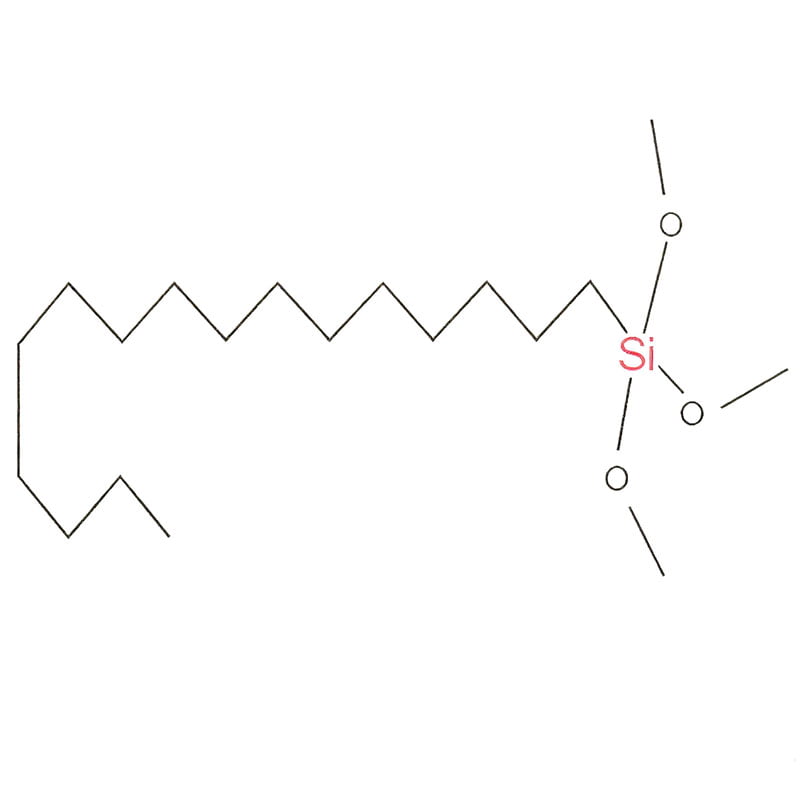
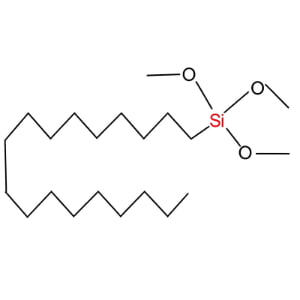
Hexadecyltrimethoxysilane (C16) | Manta L1631

Product Code: Manta L1631

Chemical Name Hexadecyltrimethoxysilane
CAS Number 16415-12-6
Product Form Liquid
Synonyms N-Hexadecyltrimethoxysilane; Trimethoxyhexadecylsilane; Long-Chain Alkyl Functional Silane (C16)

Technical Specifications

PARAMETER VALUE / RANGE

Product Description

Manta L1631 is hexadecyltrimethoxysilane (CAS 16415-12-6, ≥95.0% GC purity), a C16 alkyl silane used to treat ATH, MDH and other mineral fillers for HFFR cable compounds, disperse pigments, protect glass fiber, and serve as the active base for silane creams. Comparable to Evonik Dynasylan 9116 and Wacker GENIOSIL HDTM-T, its low volatility extends substrate dwell time.

Manta L1631 is a monomeric long-chain alkylfunctional silane, chemically identified as n-hexadecyltrimethoxysilane. Featuring an exceptionally long 16-carbon (C16) linear alkyl chain, this silane exhibits profound hydrophobicity and outstanding lipophilicity (affinity for non-polar matrices).

Due to its highly non-polar C16 structure, Manta L1631 drastically reduces the surface energy of treated substrates. This makes it an elite surface modifier for inorganic fillers, pigments, and glass fibers, ensuring perfect dispersion and compatibility within non-polar polymer matrices (such as polyolefins).

Meanwhile, its highly reactive methoxy groups ensure rapid hydrolysis and efficient chemical bonding to inorganic surfaces. Furthermore, its high molecular weight translates to extremely low volatility, high thermal stability, and long-lasting performance even under demanding processing conditions.

Equivalent to Industry Standards: Evonik Dynasylan® 9116, Wacker GENIOSIL® HDTM-T

Applications

  1. Premium Surface Modifier for Mineral Fillers (Plastics & HFFR Cables)

Acts as a highly efficient surface treatment agent for inorganic flame retardants, such as ATH (Aluminum Trihydroxide) and MDH (Magnesium Dihydroxide).

Significantly improves the dispersion and compatibility of highly loaded fillers within non-polar polymer matrices (e.g., PE, PP, EVA).

Widely used in the production of Halogen-Free Flame Retardant (HFFR) cables, enhancing melt flow processability, reducing compound viscosity, and preserving the mechanical properties of the final product.

  1. Active Ingredient for Silane Creams & Emulsions (Concrete Protection)

Serves as an excellent active base material for formulating high-end, VOC-compliant silane creams/gels and water-based water repellent emulsions.

Due to its exceptionally low volatility and slow evaporation rate, it ensures a longer dwell time on the substrate surface, allowing for deeper penetration into high-density concrete and infrastructure without significant evaporation loss.

  1. Pigment Dispersion & Color Masterbatches

Dramatically lowers the surface energy of inorganic pigments (such as titanium dioxide and iron oxides), facilitating rapid wetting and superior dispersion in non-polar media.

Helps formulators achieve higher pigment loading, lower processing viscosity, and enhanced color strength.

  1. Treatment for Glass Fibers & Mineral Wool

Imparts excellent, long-lasting water resistance to glass fibers and mineral wool.

Improves the resin wet-out process and enhances interfacial adhesion between the inorganic fibers and organic resin matrices.

Application Areas

Plastics & Masterbatches Wire & Cable Composites & Fiberglass

Packaging & Handling

Packaging

In 20kg pail, 180kg drum and 900kg IBC


Safety and Storage

Store in a cool, dry, and well-ventilated area away from direct sunlight and moisture. Keep containers hermetically sealed at all times.

Shelf Life & Transport: 12 months from the date of manufacture when stored properly. It is non-hazardous substance.

Support

Frequently Asked Questions

How does Manta L1631 improve halogen-free flame retardant (HFFR) cable compounds?

It surface-treats inorganic flame retardants such as ATH and MDH, improving dispersion and compatibility of highly loaded fillers in non-polar matrices like PE, PP and EVA. This enhances melt flow processability, reduces compound viscosity and preserves the mechanical properties of the finished cable.

Why is L1631 used as the active base for silane creams and water repellent emulsions?

Its exceptionally low volatility and slow evaporation give a longer dwell time on the substrate, allowing deeper penetration into high-density concrete and infrastructure without significant evaporation loss—suited to VOC-compliant silane creams/gels and water-based emulsions.

What does L1631 do for pigment dispersion in masterbatches?

It sharply lowers the surface energy of inorganic pigments such as titanium dioxide and iron oxides, enabling rapid wetting, higher pigment loading, lower processing viscosity and enhanced color strength.

Can L1631 treat glass fibers and mineral wool?

Yes. It imparts long-lasting water resistance to glass fibers and mineral wool, improves resin wet-out, and strengthens interfacial adhesion between the inorganic fibers and organic resin matrices.

Still have questions?
Our technical team is ready to help with formulation support.
Contact Us

Ready to work with Hexadecyltrimethoxysilane (C16) | Manta L1631?

From 1-gram laboratory trials to 1,000+ kg production runs. Full CoA, SDS, REACH/TSCA documentation included. Laboratory samples available within days.

+86 189 6107 1292 inquiry@mantasil.com